Enterprise Knowledge Management System
A system that captures, organises and searches the know-how of the staff at Master Foodeh, a manufacturing company, so it is not lost. Employees record knowledge with attachments, files are turned into searchable text with AI, colleagues rate each other's knowledge and a chatbot answers questions from it. I designed and built the entire user interface.
Non-technical users had to attach many kinds of files effortlessly and turn them into knowledge text; the interface had to be fully Persian and right-to-left with Persian digits and the Jalali calendar; users have different permissions (create, approve, assess, pro features) and must see only what they are allowed to; and the system runs on an internal, air-gapped server.
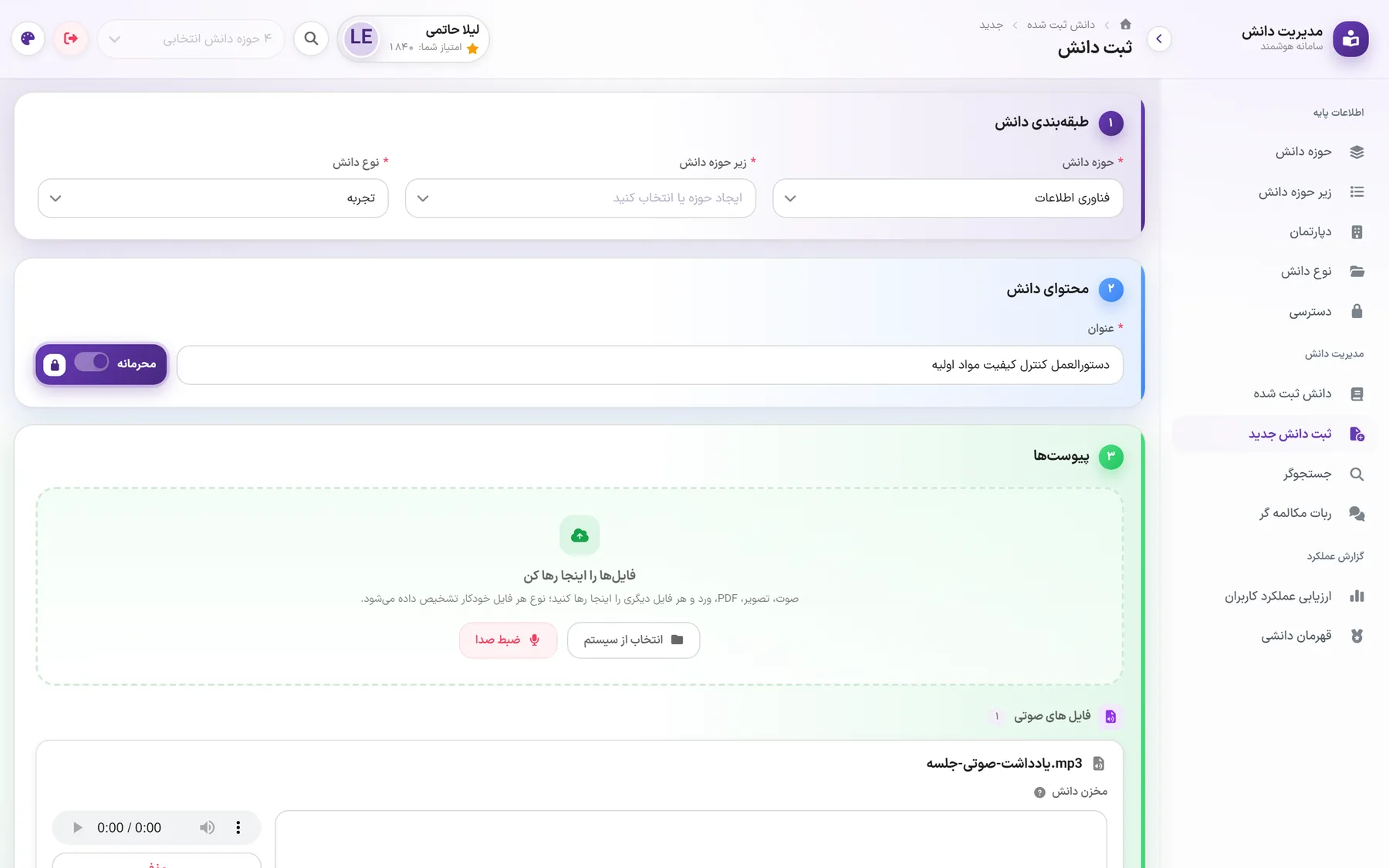
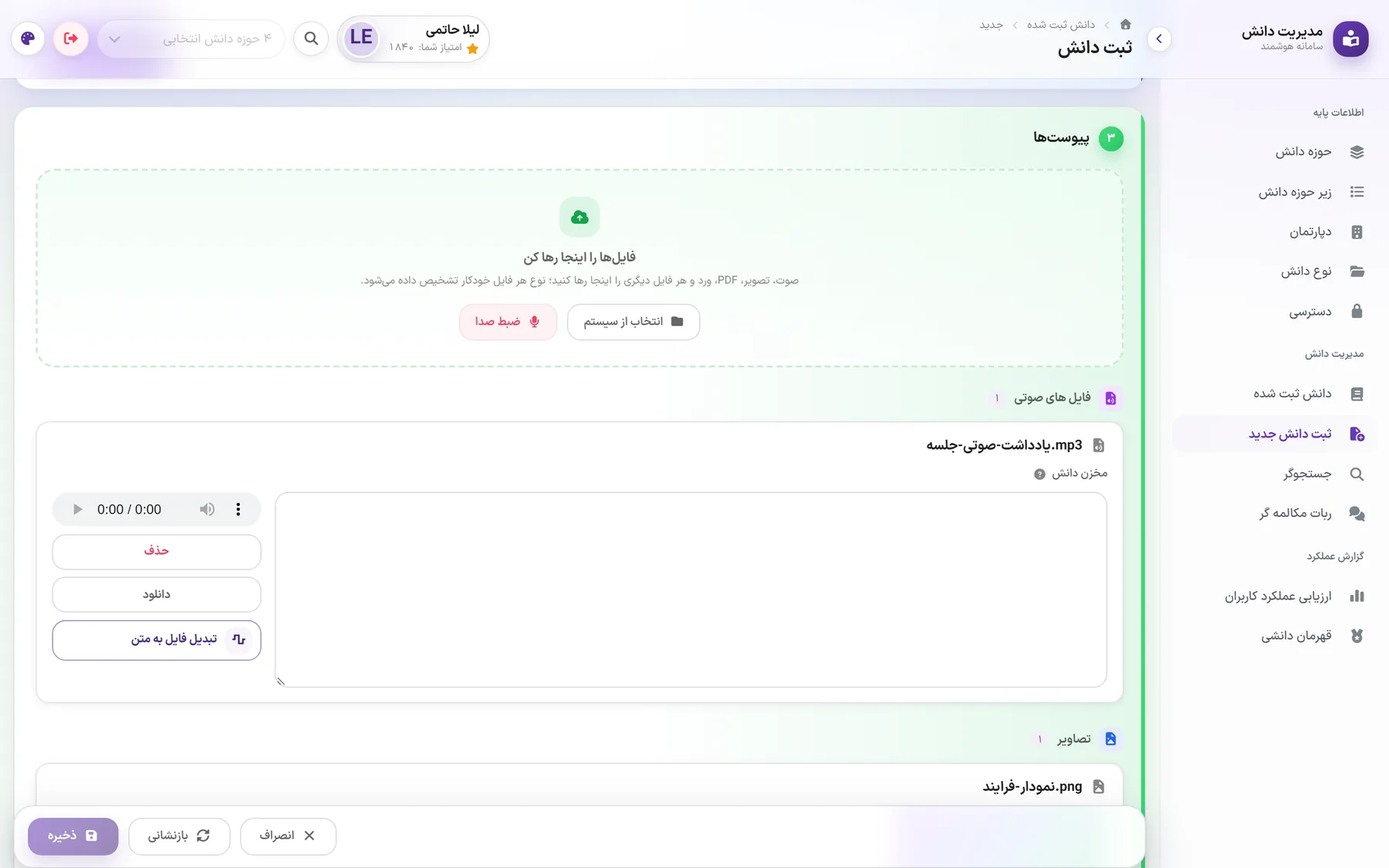
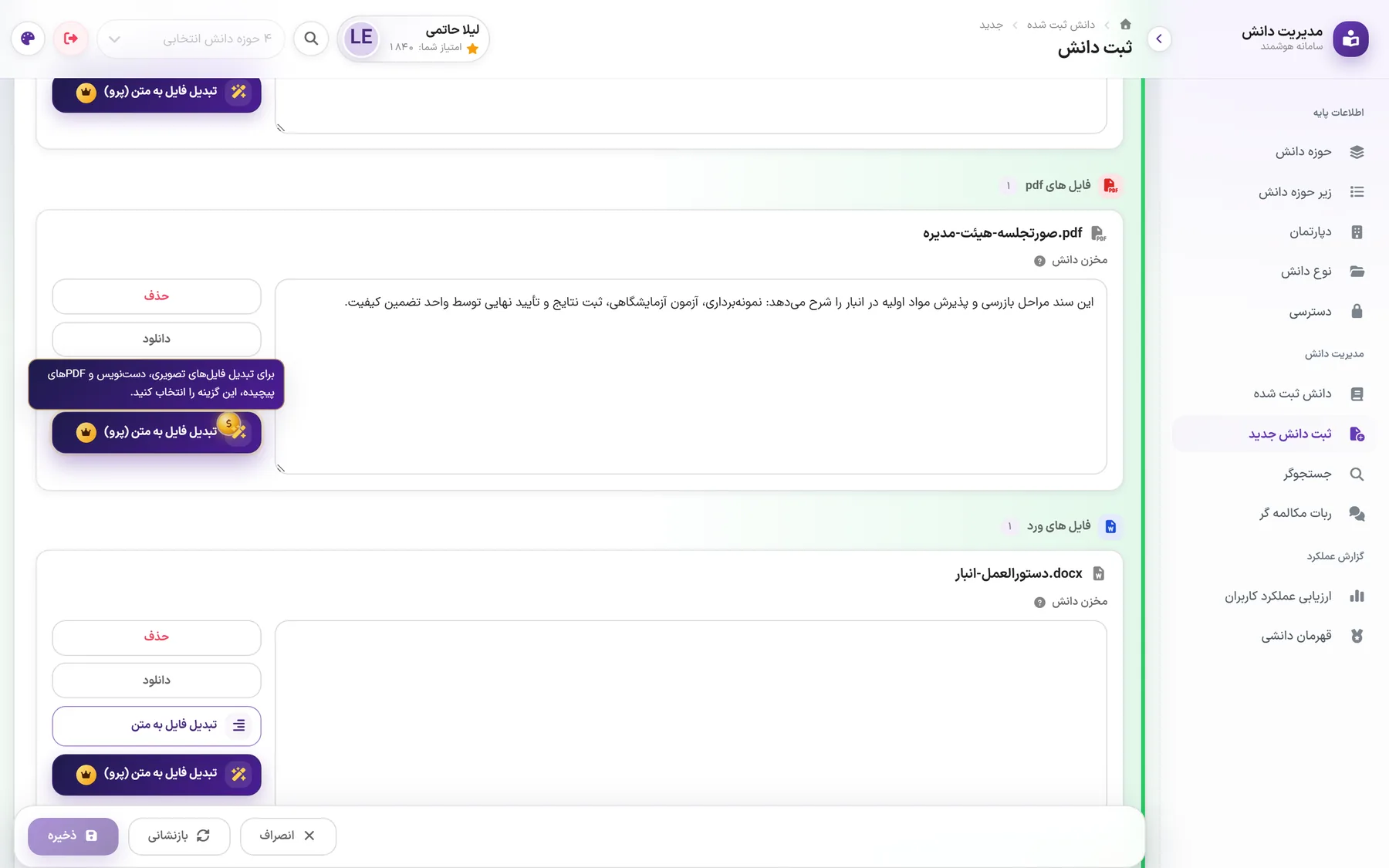
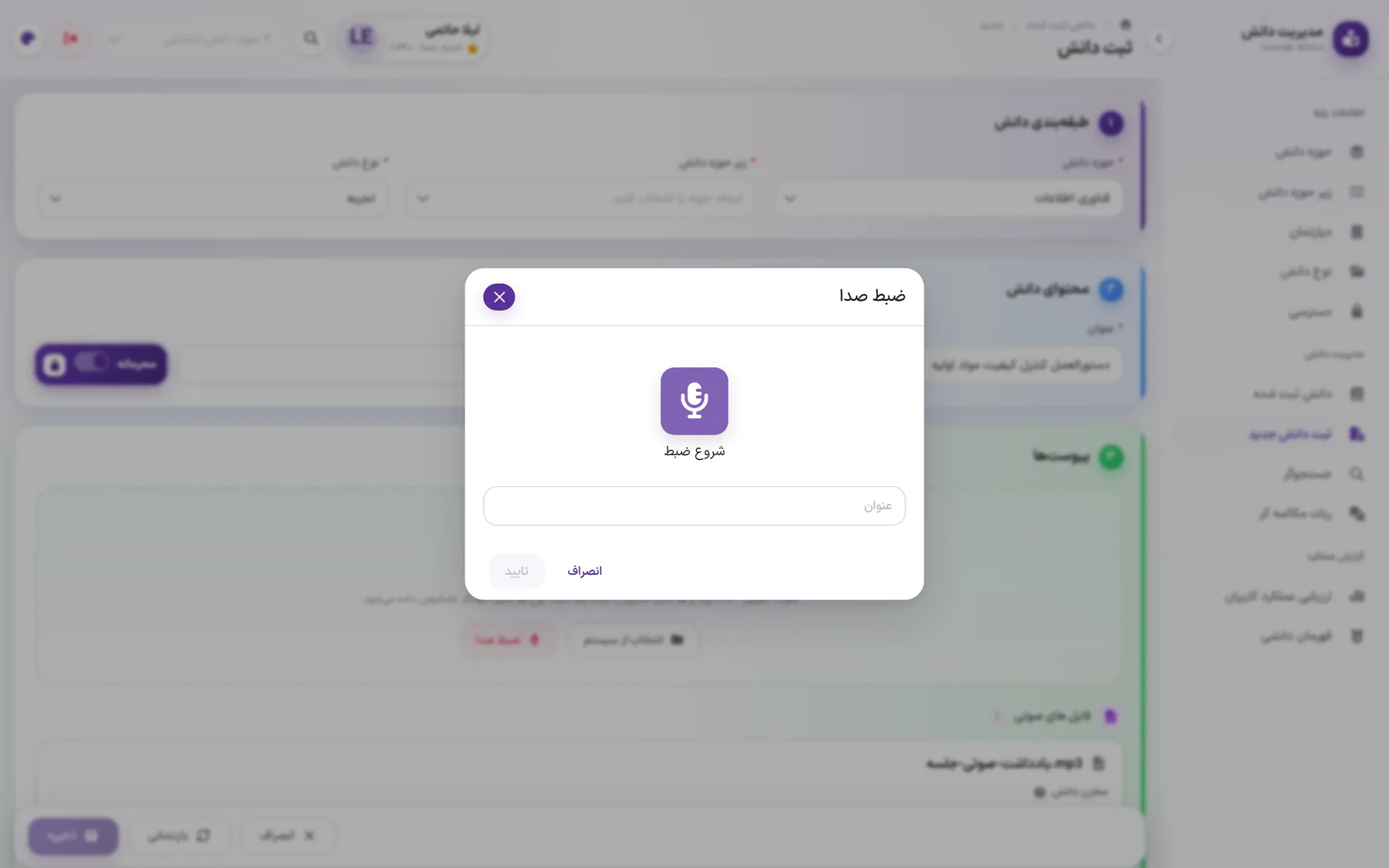
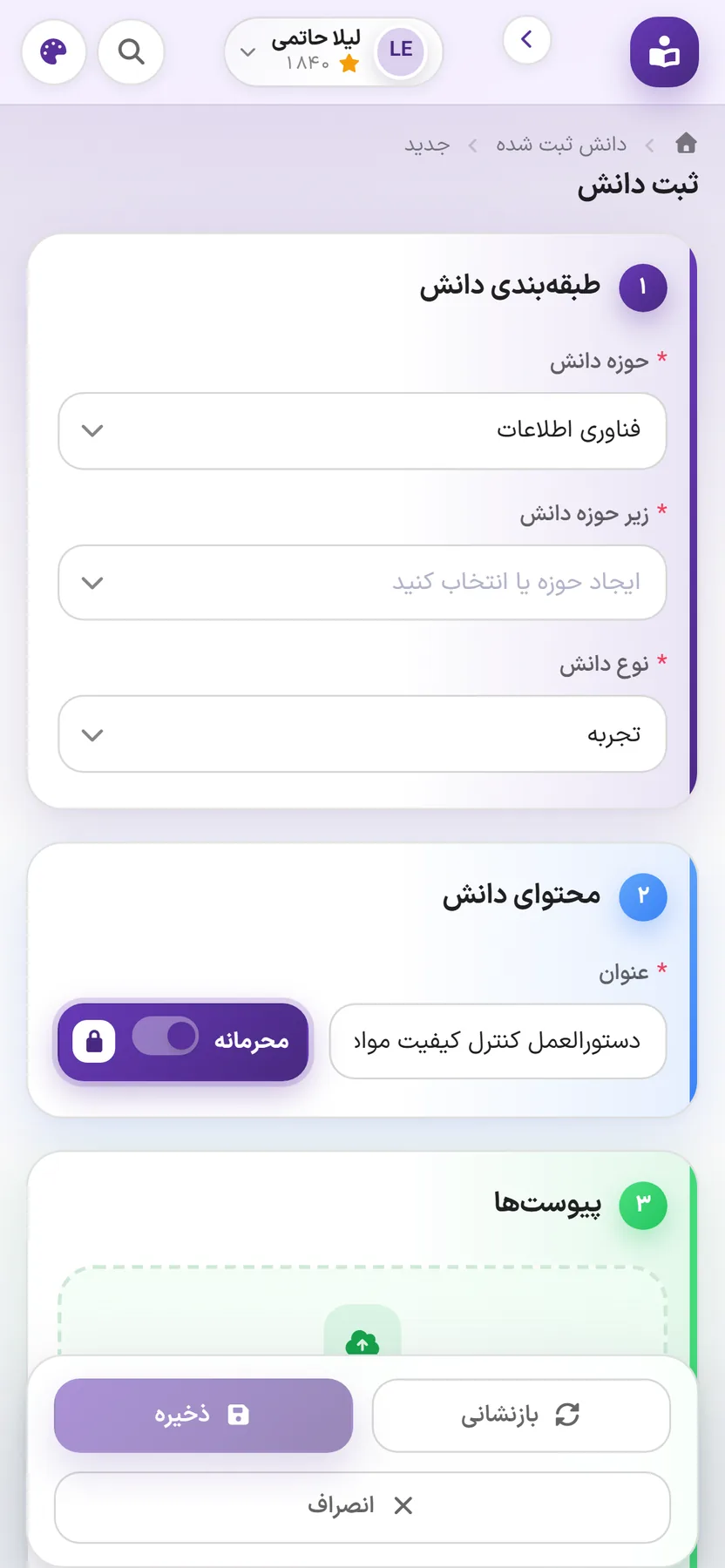
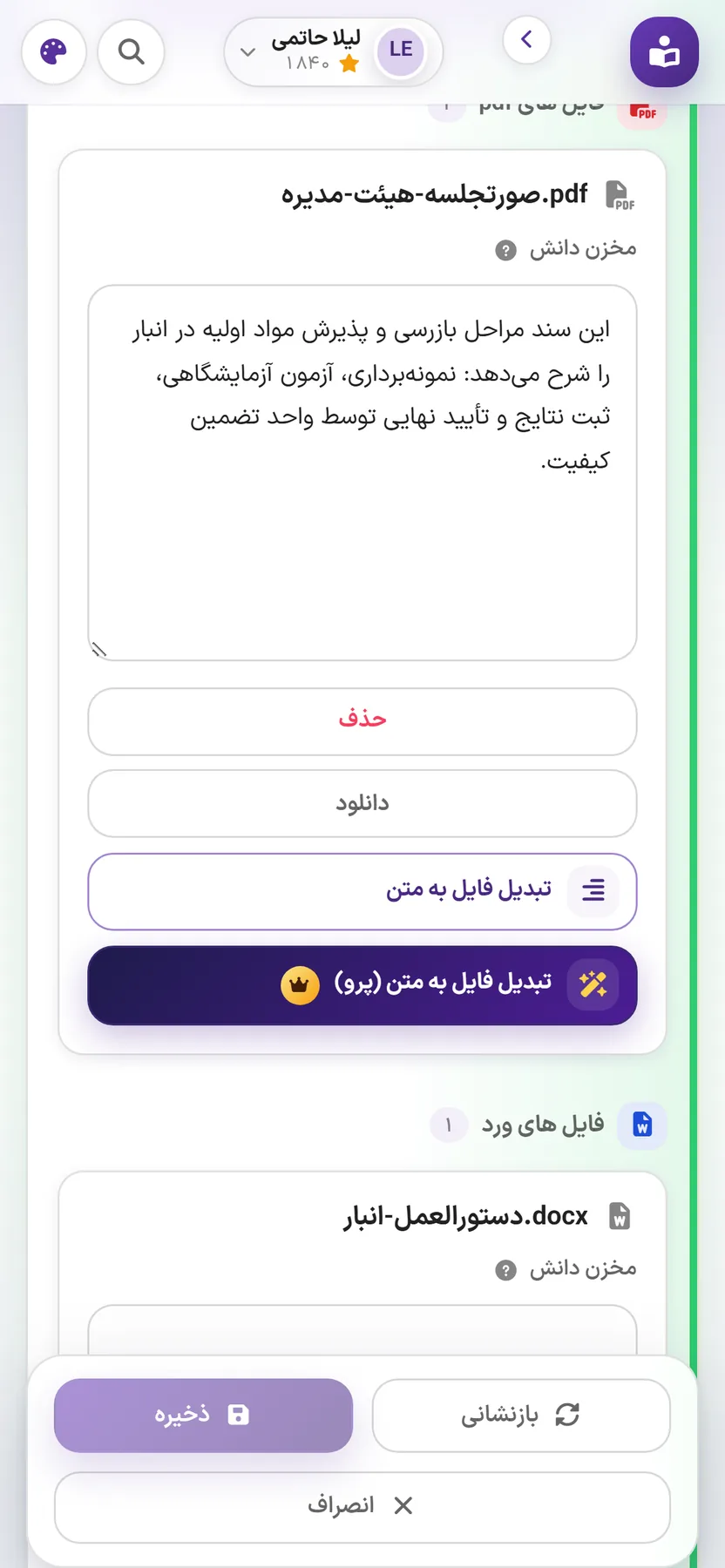
In the knowledge form you drop any number of files at once; each file's type is detected automatically and it lands in its own group (audio, image, PDF, Word, other documents). Every file is a card with a preview, its knowledge text box and delete, download and convert-to-text actions. Voice can be recorded right in the browser, and file-to-text has two routes: standard for text-based files and pro (AI) for images, handwriting and complex PDFs; the pro button is shown locked to users without access so they know the feature exists.
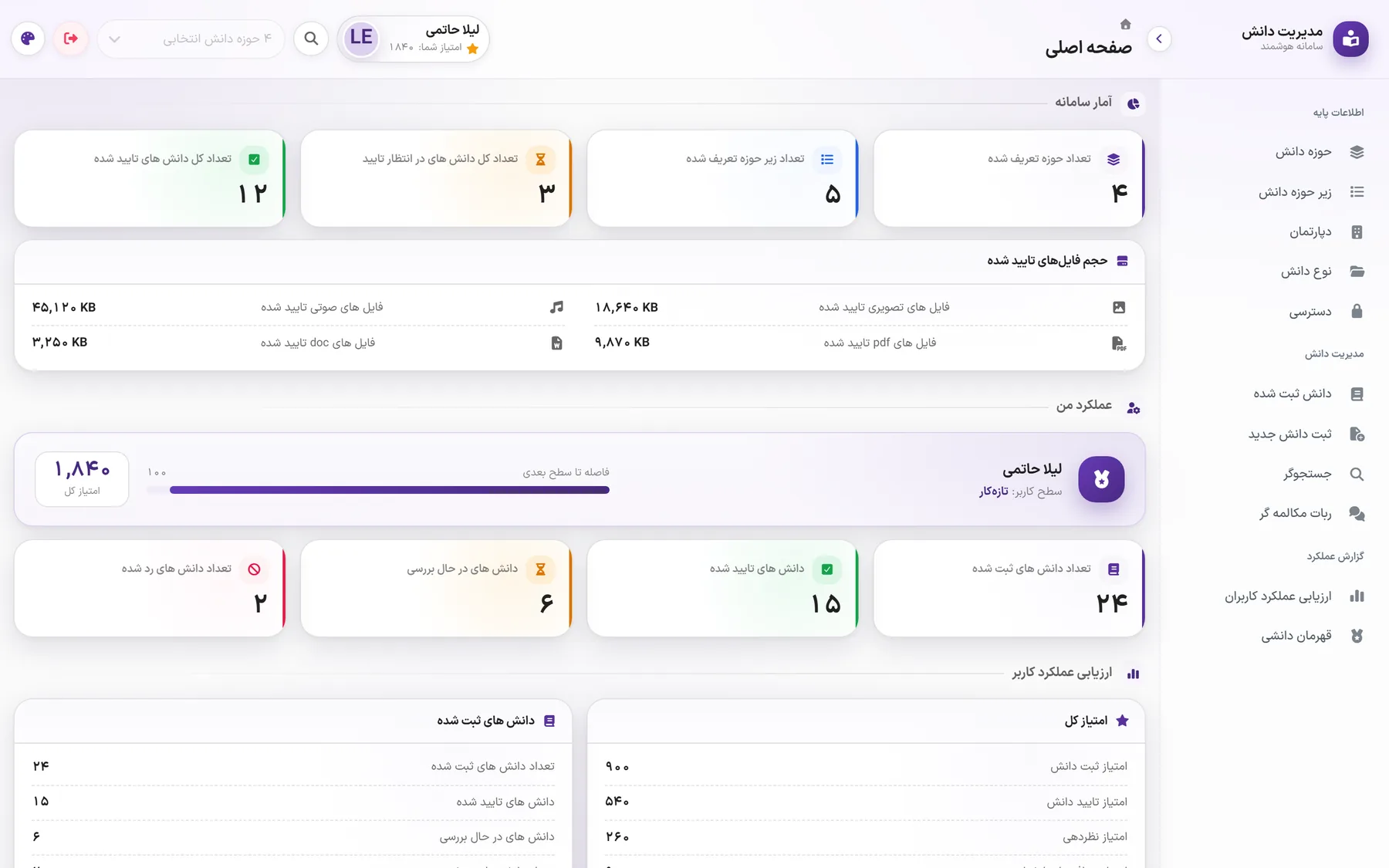
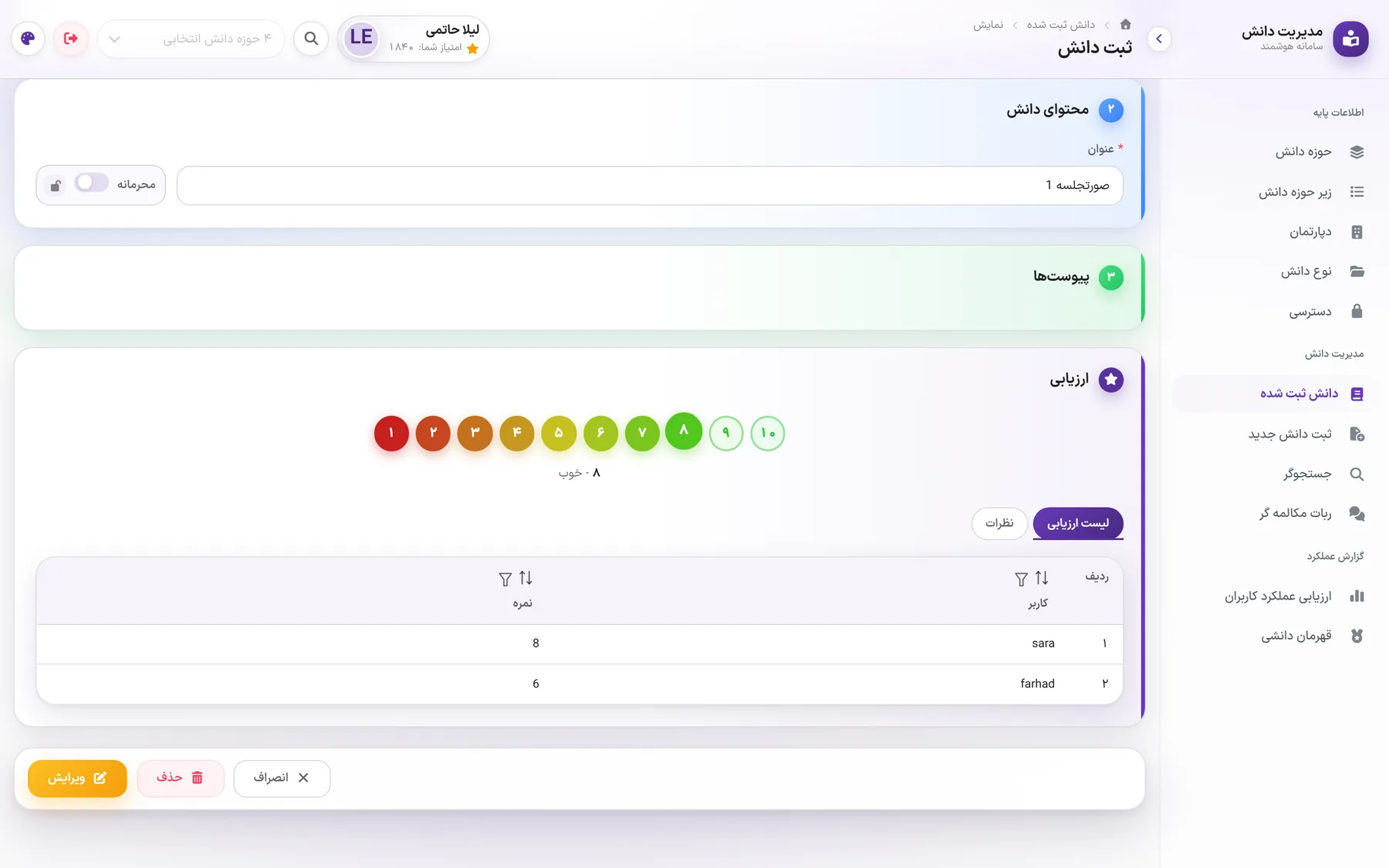
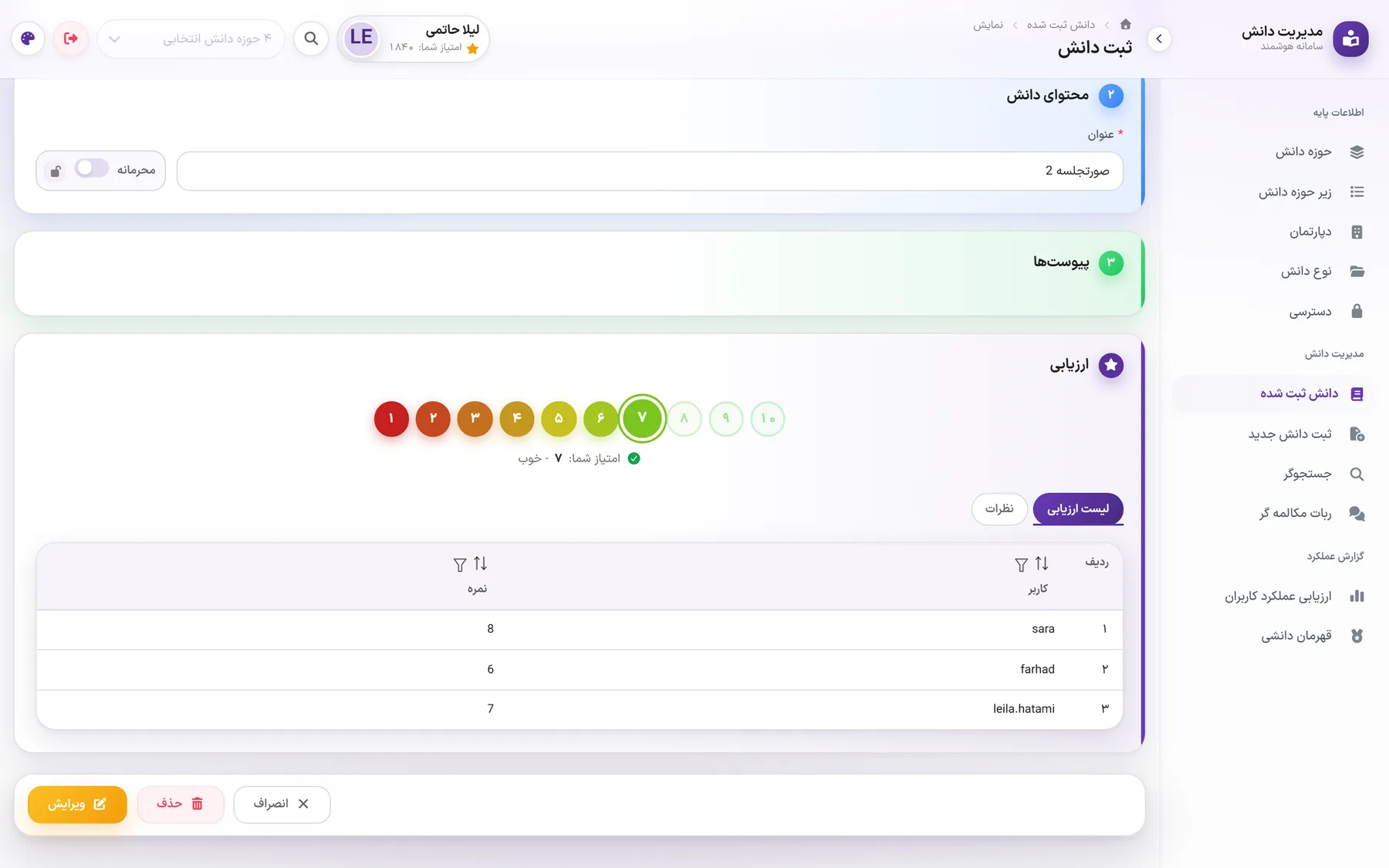
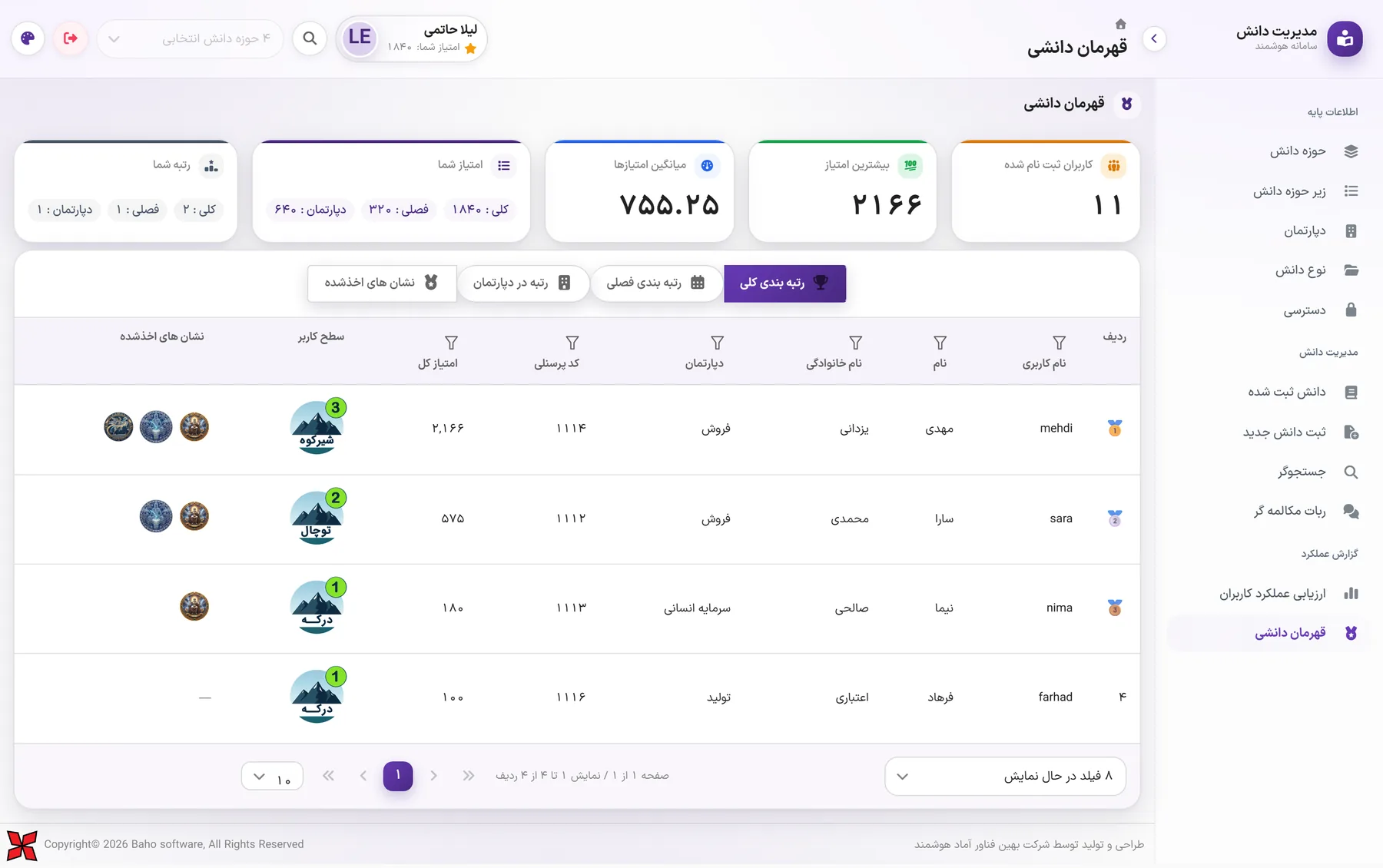
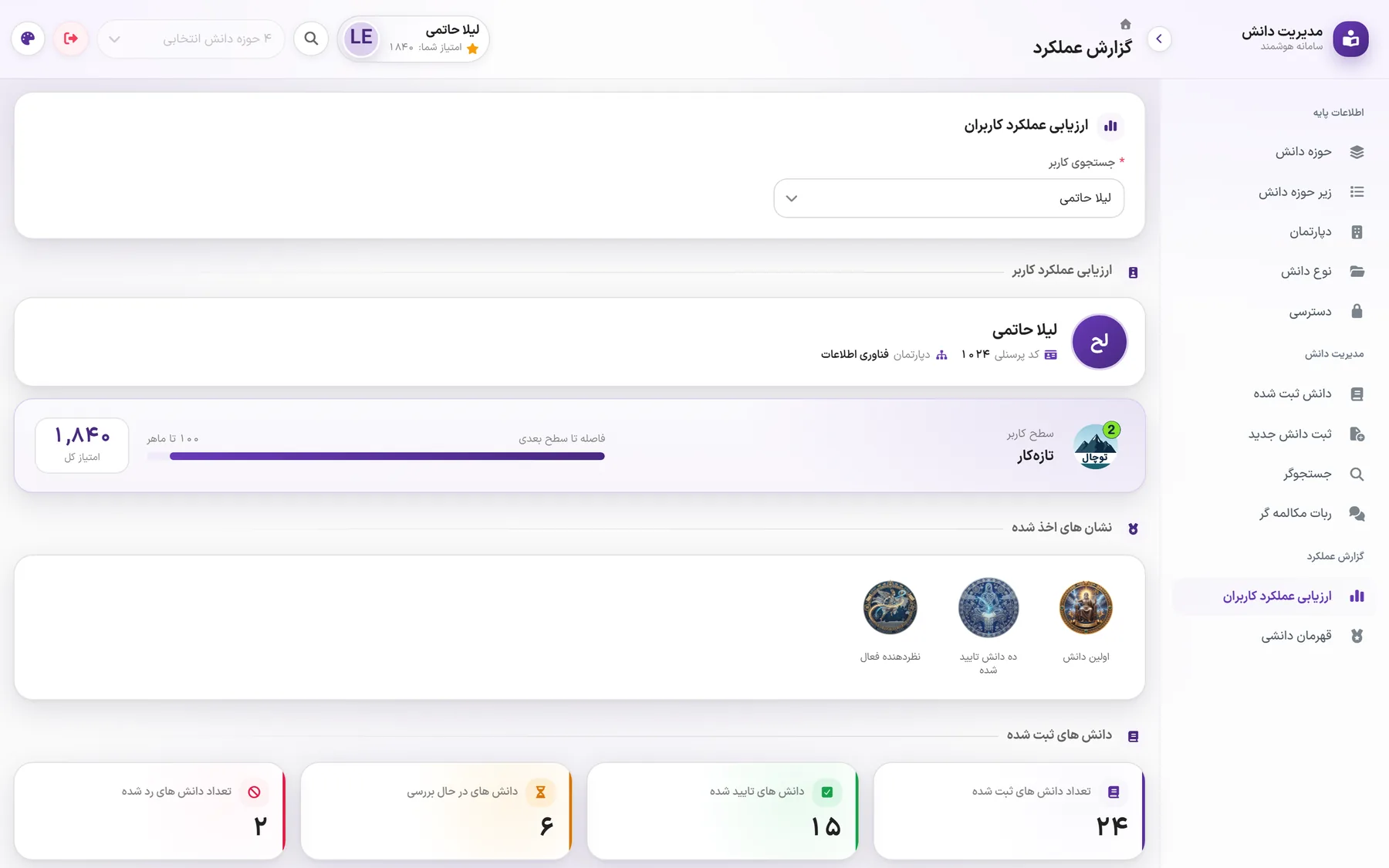
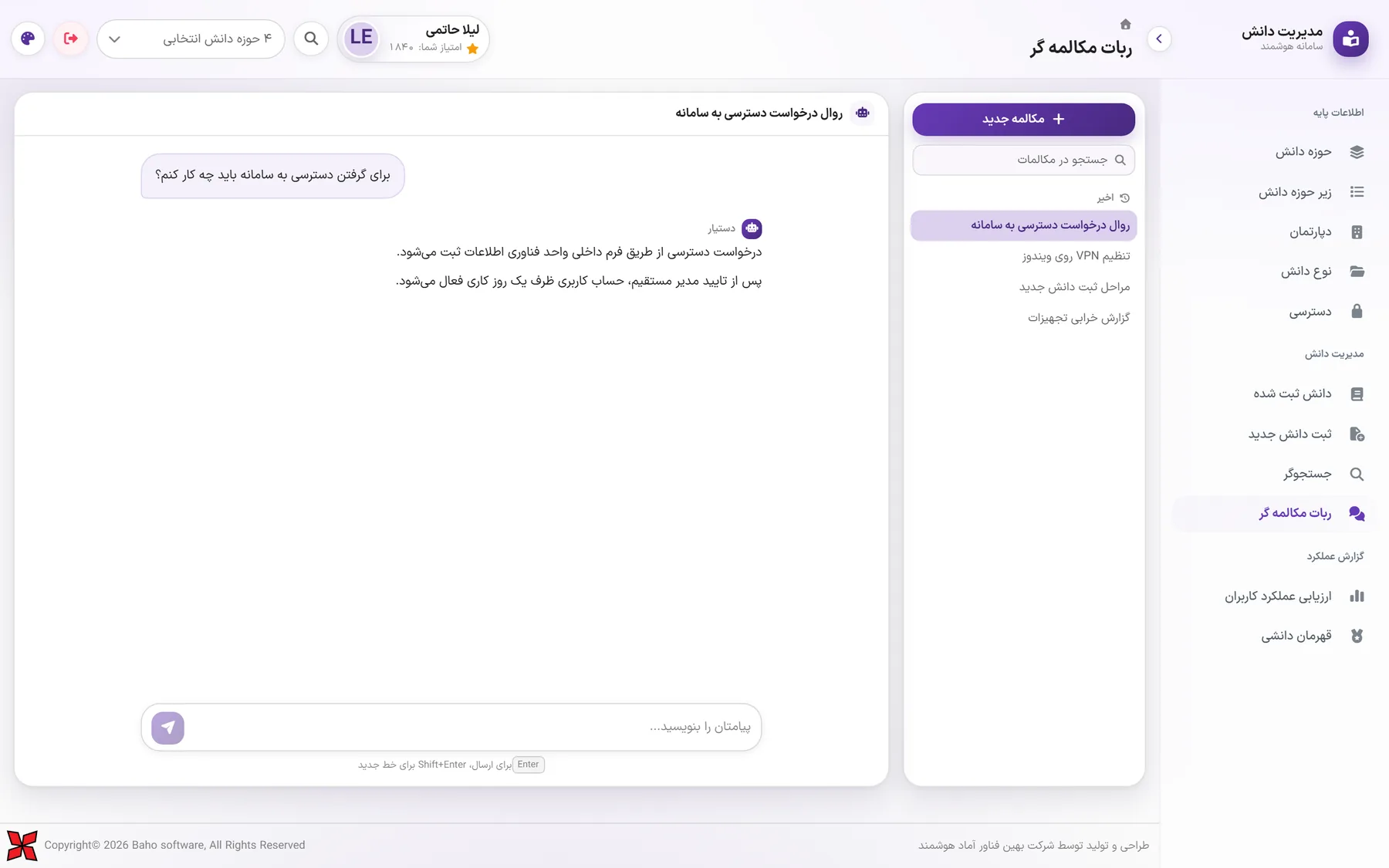
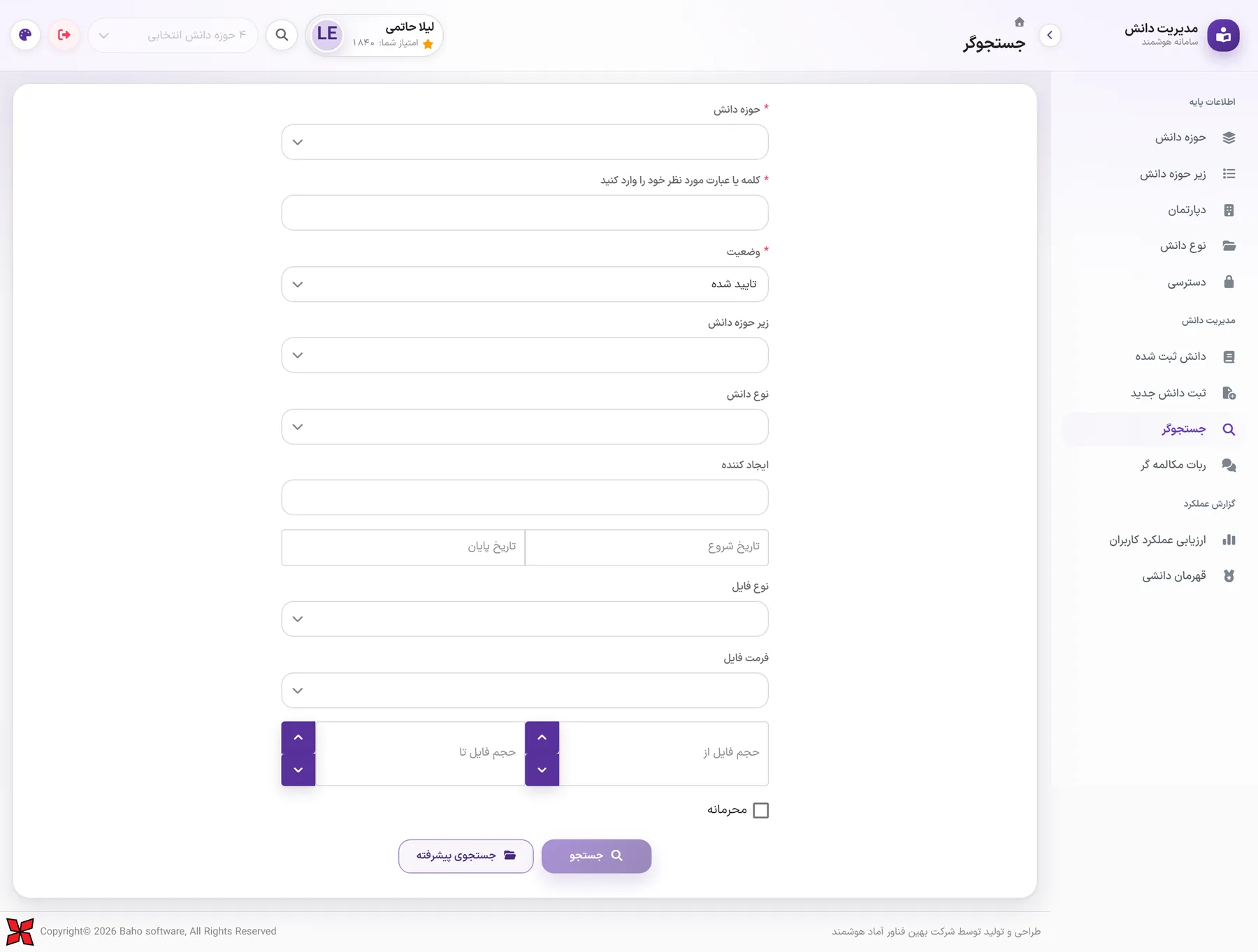
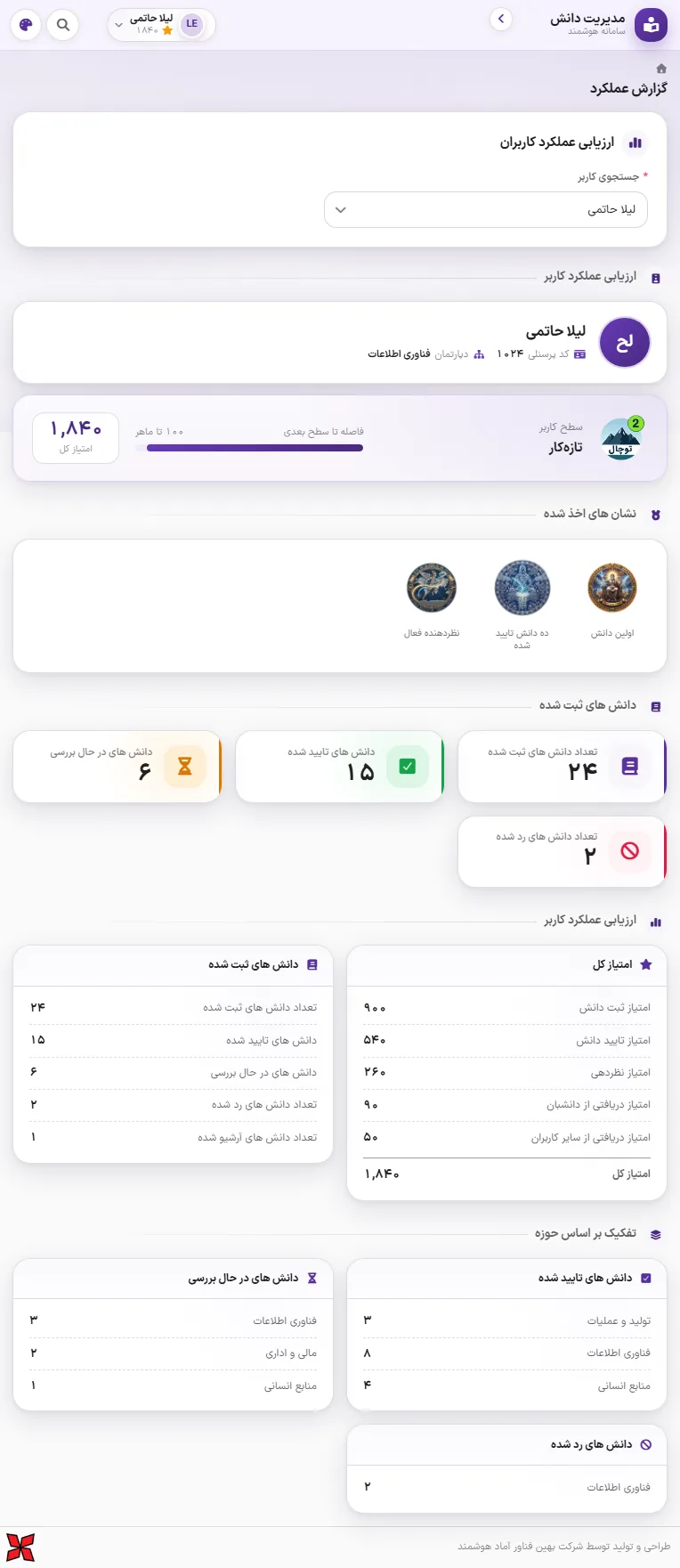
Rating is a single click on a coloured 1–10 scale, after which the row locks. The knowledge-champions page shows overall, seasonal and department rankings with user levels and badges, and each user's performance report breaks down points and created/approved/rejected knowledge by domain. Advanced search filters by sub-domain, knowledge type, author, Jalali date range and file type and size, and the chatbot has a messenger-style UI with history, pinning and like/dislike on answers.
The UI is fully responsive and installable as a PWA, menus and actions are built from each user's permissions, and sign-in goes through Keycloak SSO. I built a mock data layer so the whole UI runs and can be tested without the backend; it is deployed with Docker and Nginx to an offline internal server with one-step rollback, and I tracked down and fixed real bugs from production logs.
Key features
- Drop many files at once, auto-grouped by type (audio, image, PDF, Word, other)
- Attachment cards with preview, knowledge text and delete/download/convert actions
- In-browser voice recording; the microphone is requested only when recording starts
- Standard and pro (AI) file-to-text, shown locked to users without access
- One-click 1–10 rating that locks once saved, matching the backend's rules
- Knowledge champions: overall, seasonal and department rankings with levels and badges
- Per-user performance report broken down by domain
- Simple and advanced search with Jalali dates and file type/size filters
- Chatbot with history, pinning, search, copy and like/dislike
- Responsive PWA, permission-driven menus and Keycloak SSO
- Mock data layer to run and test the UI without the backend
- Docker and Nginx deployment to an offline internal server
Technologies
My role
Front-end developer: UI design and Angular implementation
An internal Master Foodeh system with no public version or published source. Freelance work; I was responsible for the front end only. All screenshots come from the development build with mock data.
Screenshots